Original Author: Seed.eth, Bitpush News
Hyperliquid, firmly holding the top spot in the crypto derivatives track, is now attempting to extend its reach into another trillion-dollar market on the brink of explosion: the prediction market.
Today, Hyperliquid officially announced the testing of a new feature called 'Outcomes'. This news directly ignited excitement in the secondary market, with its native token HYPE recording a gain of over 10% within 24 hours, breaking through the $30 mark.
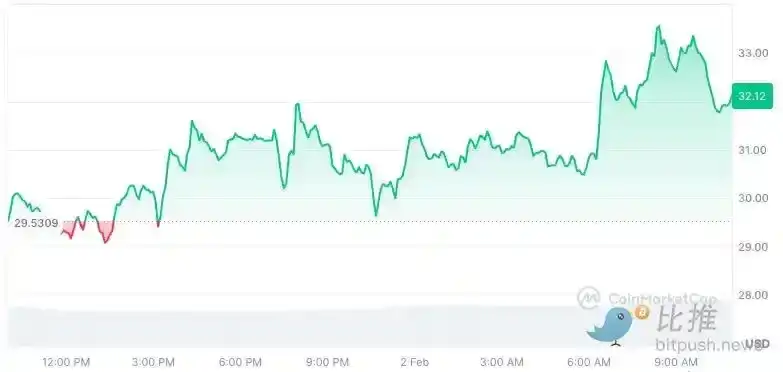
At a time when Polymarket dominates on-chain traffic and Kalshi, in partnership with Coinbase, captures the compliant market, Hyperliquid's entry is far from simple 'bandwagoning'. Instead, it leverages the absolute advantage of its native underlying performance to redefine the rules of the game.
What is Outcomes
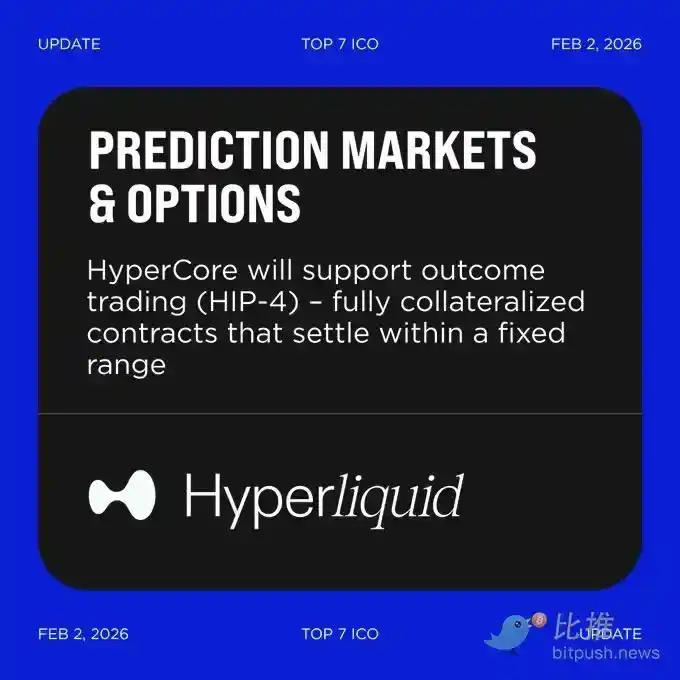
According to the official HIP-4 proposal, Outcomes (Result Contracts) are not a simple betting interface. Their design hinges on the following three core logics:
1. Full Collateralization, No Liquidation Risk
Unlike leveraged perpetual contracts, Outcomes adhere to the principle of 'you can only do as much as your money allows'. It uses full collateralization and settles within a fixed range. This means that no matter how the market fluctuates, as long as the settlement date hasn't arrived, a trader's position will not face forced liquidation, fundamentally removing the risk of being liquidated.
2. Non-linear Settlement, Greater Strategic Space
Outcomes introduces a non-linear settlement mechanism. For traders, this is equivalent to gaining a flexibility close to that of options. You can use it to build more complex hedging instruments, no longer limited to simple binary 'yes' or 'no' games, thereby opening up greater space for risk management and strategic combinations.
3. Native Integration, Liquidity Connectivity
Outcomes will be deeply integrated into HyperCore, Hyperliquid's underlying chain, and priced in its native stablecoin USDH. More importantly, it will share cross-margin with the platform's existing spot and perpetual contracts. This means users can seamlessly connect multiple trading strategies within a single margin account, truly achieving interoperability and reuse of liquidity.
Multi-Party Fragmentation: Who is the Final Form of the Prediction Market?
The current prediction market is at its '1995 browser war' moment, forming four distinct business paths:
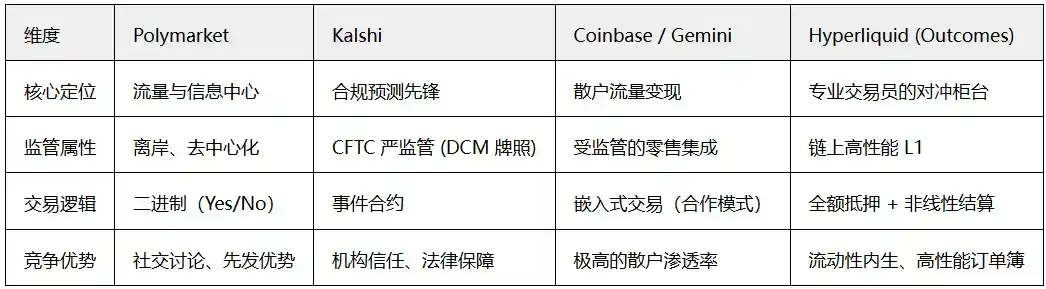
- Polymarket sells 'opinions'; it's a barometer of social trends.
- Kalshi sells 'compliance'; it attracts US domestic capital seeking to avoid legal risks.
- Coinbase is about 'dimensionality reduction attack', turning the prediction market into a mass consumer product through an in-app feature.
- Hyperliquid's logic is the most hardcore: it doesn't require you to click Yes or No on a webpage; it wants you to buy an Outcomes contract hedging 'non-farm payroll data exceeding expectations' while shorting BTC.
Right now, the community is most focused on the synergistic effect between HIP-3 (Permissionless Listing) and HIP-4 (Outcomes).
Under this architecture, Hyperliquid's evolution path is clear: first, official deployment of 'Canonical Markets' based on objective data sources, such as interest rates and macroeconomic indicators; followed by enabling permissionless deployment.
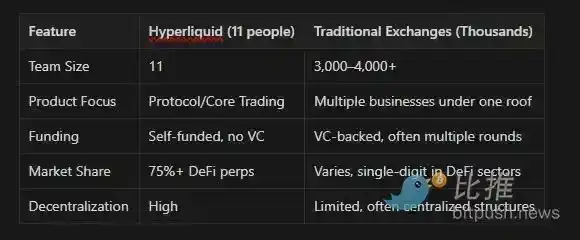
Behind this strategy is Hyperliquid's legendary team advantage. It's hard to imagine that this behemoth, with annualized revenue exceeding $1.1 billion and trading volume rivaling top-tier CEXs, is supported by a core team of only about 11 people. This 'special forces' team, composed of Harvard, MIT elites, and top quantitative hedge fund professionals, has created an astonishing efficiency of over $100 million in annualized revenue per capita. Precisely because the team is extremely lean with short decision-making paths, Hyperliquid can iterate rapidly.
A senior DeFi observer commented: 'Coinbase's entry validates the business model, but it is still centralized. Hyperliquid's Outcomes is challenging a proposition: the endgame of prediction markets does not lie in social media, but in financialization. When trading prediction outcomes becomes as smooth as buying and selling stocks, and can share margin with futures, the imagination space for on-chain finance truly opens up.'
Is HYPE Severely Undervalued?
As the crypto options market matures, the Open Interest (OI) in Hyperliquid's HIP-3 market has surged to $1 billion, and the platform's 24-hour trading volume has skyrocketed to $4.8 billion, hitting a new all-time high.
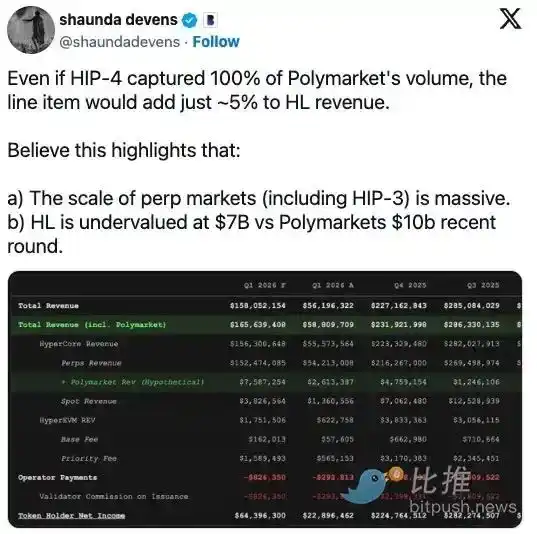
Regarding this move, Blockworks researcher Shaunda Devens believes it further supports Hyperliquid's valuation upside.
Devens pointed out that even if HIP-4 captured 100% of Polymarket's trading volume, its contribution to Hyperliquid's revenue would only be about 5%.
This data seems surprising at first glance, but the underlying logic is: the perpetual contracts market (including the long-tail assets brought by HIP-3) is extremely large. Devens believes that Hyperliquid's current valuation of approximately $7 billion is clearly in a state of significant undervaluation compared to Polymarket's latest round valuation of $10 billion (based on 2025 funding data). The launch of Outcomes is primarily about supplementing a key piece of its full-category financial matrix.
Despite the high market sentiment, it is important to note that Outcomes is currently still in the testnet phase, and a specific timeline for the mainnet launch has not been announced yet. However, with the explosion of the HyperEVM ecosystem, future mainstream service providers like Kalshi or Crypto.com could, in theory, migrate to run on the Hyperliquid chain using the HIP-4 protocol.
In summary, the prediction market is ushering in its best era. In the US, thanks to the advancement of regulatory clarity, the cooperation between Kalshi and Coinbase has already made prediction markets available in all 50 states; similarly strong growth momentum is also seen in the EU and Asia. For Hyperliquid, Outcomes is not a simple 'gambling game'; it is an indispensable piece of the puzzle in building the 'on-chain Wall Street'.
Original link